Get ₹1600 Shipping Credits on First Recharge of ₹1000. Use Code: FR1000 *T&C Apply.
 [custom_breadcrumbs_blog_mobile]
Consignor vs Consignee: Everything You Need to Know
[custom_breadcrumbs]
Consignor vs Consignee: Everything You Need to Know
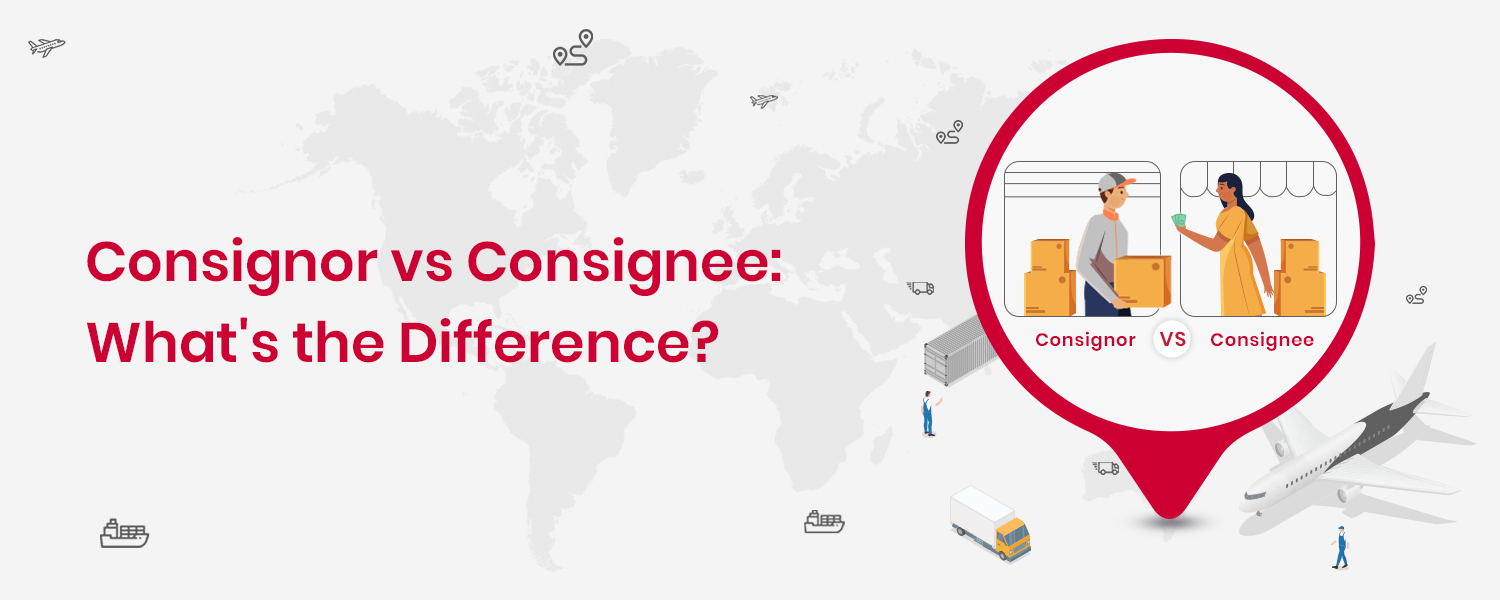
Understanding the consignor’s and consignee’s roles in shipping and logistics management is crucial for smooth operations. While seemingly straightforward, these terms are often confusing, leading to costly mistakes and delays. As global trade continues to expand, with a staggering $28.5 trillion in merchandise trade in 2022 alone, the need for clarity has never been greater.
Understanding the international waters and grasping the nuances of consignor and consignee responsibilities is paramount. This knowledge ensures compliance with regulations and empowers you to make informed decisions, streamline your processes, and ultimately achieve shipping success.
Who is the Consignor?
In the simplest terms, the consignor is the one who sets the shipment in motion. They are the core of the supply chain, responsible for getting products from their origin point to their destination. This could be a manufacturer shipping their gadgets, a wholesaler sending bulk orders, or even an eCommerce business delivering the shoes to your doorstep.
The consignors are the mastermind behind the scenes, carefully preparing goods for transit. This includes packaging to ensure the safety of items during their journey, accurate labelling for smooth processing, and thorough documentation to comply with export regulations. Until the consignee, or receiver, makes full payment, the consignor retains legal ownership. This highlights the importance of clear contractual agreements and payment terms in shipping.
Who is the Consignee?
On the receiving end of the shipping equation stands the consignee. This is the individual or business awaiting the shipment’s arrival, ready to take ownership and put those goods to use. The consignee is often the final purchaser, who will utilise or sell the products. They are the end consumers awaiting a package or a retailer stocking their shelves for the holiday season.
However, sometimes, the consignee might be a different buyer. They could be an intermediary, such as a third-party logistics provider (3PL), acting on behalf of the actual purchaser. These 3PLs are crucial in managing the complexities of international shipping, handling everything from customs clearance to final delivery.
The consignee’s responsibilities are numerous and essential. Upon arrival, they must carefully inspect the shipment to ensure the goods match the order and are in good condition. Any discrepancies or damages must be reported promptly. They are also responsible for the financial aspects of receiving the shipment, including paying import duties, taxes, and customs clearance fees.
The Consignor-Consignee Relationship
The relationship between consignor and consignee forms the very foundation of the shipping process. It’s a partnership in which each party plays a distinct yet interconnected role in ensuring goods move seamlessly from origin to destination. Without this partnership, global trade would grind to a halt.
At its core, this relationship is a transaction. As the seller, the consignor provides the goods, while the consignee, as the buyer or their representative, receives them. However, it’s not just a simple handover. The consignor retains legal ownership of the goods until the consignee fulfils their part of the agreement, typically through payment.
This transfer of ownership is a critical moment, marking the successful completion of the transaction. The bill of lading (BOL), a crucial document in this process, acts as a contract of carriage and proof of ownership. It details the type and quantity of goods, the parties involved, and the terms of shipment. When the consignee signs the BOL upon receiving the goods, it signifies their acceptance of the shipment and the transfer of ownership.
Consignor vs Consignee: Key Differences
| Feature | Consignor | Consignee |
| Role | Initiates the shipment and acts as the sender. | Receives the shipment at the designated destination. |
| Ownership | Retains ownership of the goods until the consignee makes full payment. | Gains ownership of the goods upon successful delivery and completion of payment. |
| International Trade | Typically acts as the exporter of record. | Typically acts as the importer of record. |
| Common Examples | Manufacturers, wholesalers, distributors, e-commerce sellers. | Retailers, consumers, third-party logistics providers (3PLs). |
| Financial Responsibility | Responsible for export duties, freight charges, and insurance. | Responsible for import duties, taxes, and customs clearance fees. |
Conclusion
Understanding the roles of consignors and consignees is helpful and essential in global logistics. A clear grasp of their responsibilities ensures smoother transactions, minimises risks and contributes to a more efficient and reliable supply chain.
Technology is becoming a vital ally in an increasingly complex and interconnected world. Platforms like NimbusPost are at the forefront of this revolution, offering innovative logistics services that simplify shipping, enhance transparency, and empower businesses to reach customers worldwide.
By leveraging technology and partnering with experts, businesses can optimise their supply chains, reduce costs, and stay ahead of the curve. Invest in understanding these roles, and you’ll be well on your way to conquering eCommerce logistics.
Filters